Home Espresso Without Spending Thousands: An Honest Guide
Updated 2026-09-22
Start here, because it will save you money
Espresso is the most expensive way into coffee and the least forgiving. Before recommending anything, one fact needs stating, because it determines whether the rest of this guide is useful to you:
A cheap espresso machine with a good grinder makes better espresso than an expensive machine with a bad one.
That is not a slogan. It follows from what espresso is.
What espresso actually requires
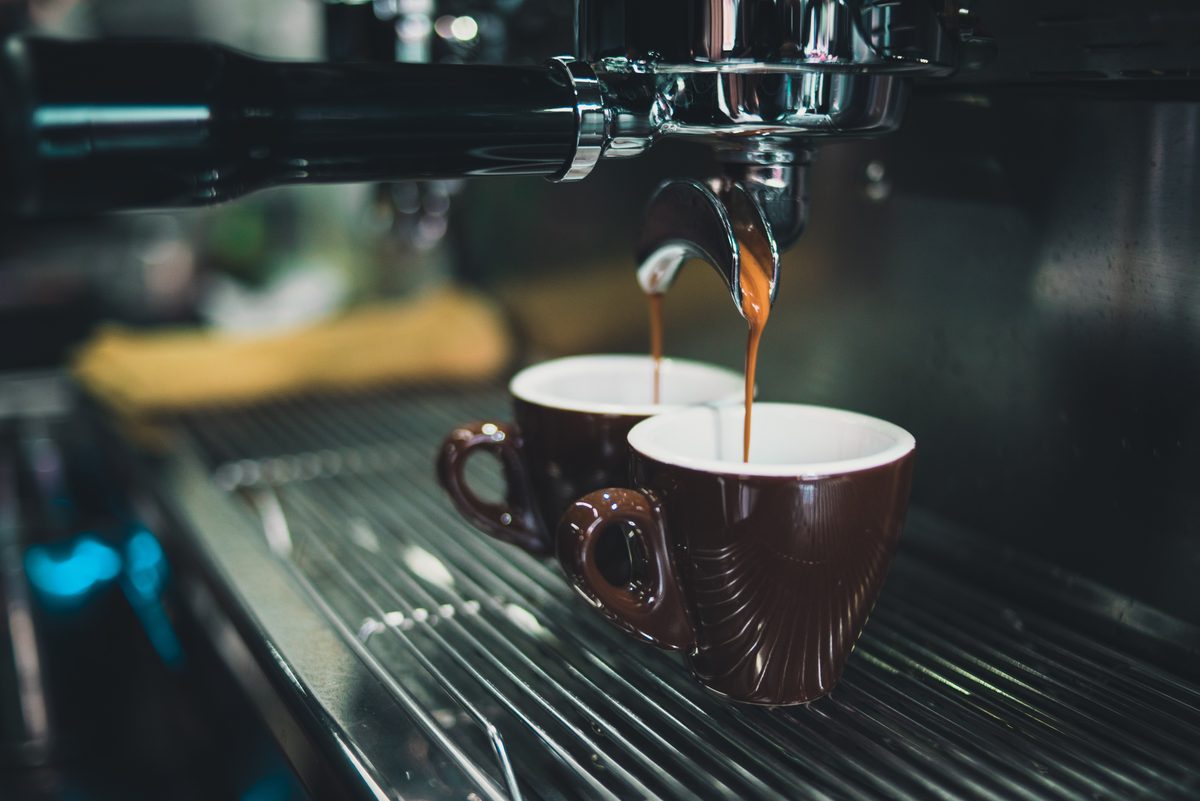
Espresso is not simply strong coffee. It is a specific extraction: hot water forced through a compacted bed of finely ground coffee at roughly nine bars of pressure, in something like 25 to 30 seconds.
Every part of that is demanding, but the grind is the part that decides everything. Water takes the path of least resistance. If your grind is uneven, water carves channels through the weak spots, races past most of the coffee, and produces a thin, sour shot no matter how good the machine is. If your grind is too coarse the shot gushes. Too fine and it chokes.
The window is genuinely narrow, and hitting it requires a grinder that can both produce consistent fine particles and adjust in small steps near the fine end of its range. Most grinders sold for filter coffee cannot do the second part at all.
This is why the budget advice for espresso differs from every other brewing method: the grinder is not an accessory to the machine, it is the harder half of the system.
What cheap machines can and cannot do
Pressurised baskets. Many entry-level machines ship with a basket that has a restrictor behind it. It creates back-pressure artificially, which means it produces something espresso-like even from an inconsistent grind. That is genuinely useful when you are starting out and have a modest grinder.
The honest trade: it is compensating rather than extracting properly, and the crema it produces is largely an artefact of the restrictor. You cannot meaningfully dial in a shot through one, because the basket is masking the variable you would be adjusting.
Steam-driven machines, the inexpensive ones that build pressure by boiling water in a sealed vessel, do not reach espresso pressure and cannot hold brewing temperature steady. They make strong stovetop-style coffee. That is a perfectly good drink, but calling it espresso sets you up for disappointment.
Pump machines with an unpressurized basket are the realistic entry point to actual espresso, and they are the point at which your grinder starts mattering enormously.
The temperature problem nobody mentions
Espresso is sensitive to brewing temperature, and cheap machines with small single boilers are not naturally stable.
Small thermal mass means temperature swings between shots and while steaming. The traditional workaround is temperature surfing: running water through, waiting for the heating cycle, and pulling at a consistent point in that cycle. It works. It is also fiddly, and it is one more variable to control while you are learning several others.
This is worth knowing before you buy, because it explains why the same machine gives different results on different mornings, which is otherwise maddening.
The routes in, honestly compared
Manual lever devices. You supply the pressure. They are inexpensive relative to pump machines, capable of genuinely excellent espresso, and require both technique and a good grinder. Appealing if you find the process interesting, frustrating if you want coffee quickly.
Entry pump machine plus the best grinder you can afford. The standard recommendation, and the reason is the opening line of this guide. Put the money into the grinder.
Moka pot. Not espresso, and this guide will not pretend otherwise, but it makes a strong, rich coffee that works well in milk drinks for a fraction of the cost and complexity. If what you actually want is a flat white at home rather than espresso specifically, this deserves honest consideration. See our AeroPress vs moka pot vs French press comparison.
AeroPress. Also not espresso, for the same reason: your arm does not produce nine bars. It makes a concentrated, clean cup that some people happily drink instead.
What to buy in what order
- A grinder capable of espresso. Consistent at fine settings, adjustable in small steps. Our burr grinder guide covers what to look for.
- A pump machine with an unpressurized basket, once the grinder is handled.
- A scale. Espresso is a ratio, and dose and yield both need measuring. This is cheap and skipping it means you are guessing.
- Fresh beans, and genuinely fresh: roast dates matter more for espresso than any other method.
Everything beyond that is refinement.
The expectation to set
Your first month of espresso will involve bad shots. This is normal and it is not the machine’s fault. You are learning to control grind, dose, distribution and timing simultaneously, and each one moves the others.
The advantage of doing this with a good grinder and a modest machine is that when a shot fails, the cause is usually something you can identify and adjust. With a poor grinder the cause is often simply the grinder, and no amount of technique will resolve it. That is the most demoralizing way to learn, and it is the one the usual budget split produces.
The short version
Espresso is a pressure-and-consistency problem, and consistency comes from the grinder. Spend there first, buy a modest pump machine second, and add a scale.
If you mostly want milk drinks rather than espresso as such, a moka pot gets you most of the way for a small fraction of the money, and there is no shame in that being the right answer.
And fix your water before blaming anything else. See why your coffee tastes flat.
🏠 Smart Home Picks
Same hobbyist care applied to your network and your front door.