AeroPress vs Moka Pot vs French Press: Which One Suits You
Updated 2026-09-22
Three answers to different questions
These three get recommended interchangeably, usually by someone who owns one of them. They are not interchangeable. They produce genuinely different coffee, ask different things of you, and fail in different ways.
None needs electricity. All three are cheap next to any machine. All three will outlive several kettles. Beyond that they have almost nothing in common.
| French press | AeroPress | Moka pot | |
|---|---|---|---|
| Produces | Full-bodied, sedimenty | Clean, concentrated, adjustable | Strong, intense, espresso-adjacent |
| Grind | Coarse | Fine to medium | Fine, but not espresso-fine |
| Effort | Lowest | Moderate, hands-on | Moderate, needs attention |
| Makes | Several cups at once | One cup, occasionally two | Fixed by pot size |
| Forgiving? | Yes | Very | Not remotely |
| Cleanup | The worst part | Trivial | Fiddly |
French press: the one you already understand
Coarse grounds, hot water, wait, press. The grounds sit in the water the whole time, which is why the result is full-bodied and carries oils and fine sediment that paper filters would remove.
It suits you if you want several cups at once, you like a heavy body, and you want the least demanding option. It is genuinely hard to ruin.
It does not suit you if you dislike sediment. There will be sediment. Metal mesh cannot do what paper does, and no technique removes it entirely.
The mistake people make: grinding too fine. Fine grounds slip through the mesh and keep extracting after pressing, so the pot turns bitter while you drink it. Coarse, and decant what you are not drinking immediately.
AeroPress: the forgiving one
Coffee and water in a chamber, a paper filter, and air pressure pushing the brew through. It is fast, the paper removes sediment, and the short contact time makes it remarkably tolerant of imprecision.
It suits you if you make one cup at a time, you travel, or you want to experiment. It is close to indestructible, the cleanup is a single push into the bin, and it responds to changes in grind, time, and temperature in ways you can actually taste. That makes it the best of the three for learning.
It does not suit you if you need to serve several people. It is a one-cup device, and each cup is a separate operation.
On the espresso question: it makes a concentrated brew, not espresso. Espresso requires around nine bars of pressure. Your arm produces a small fraction of that. The result is closer to a strong, clean filter coffee, and it is good on its own terms. Anyone claiming otherwise is selling something.
Moka pot: the demanding one
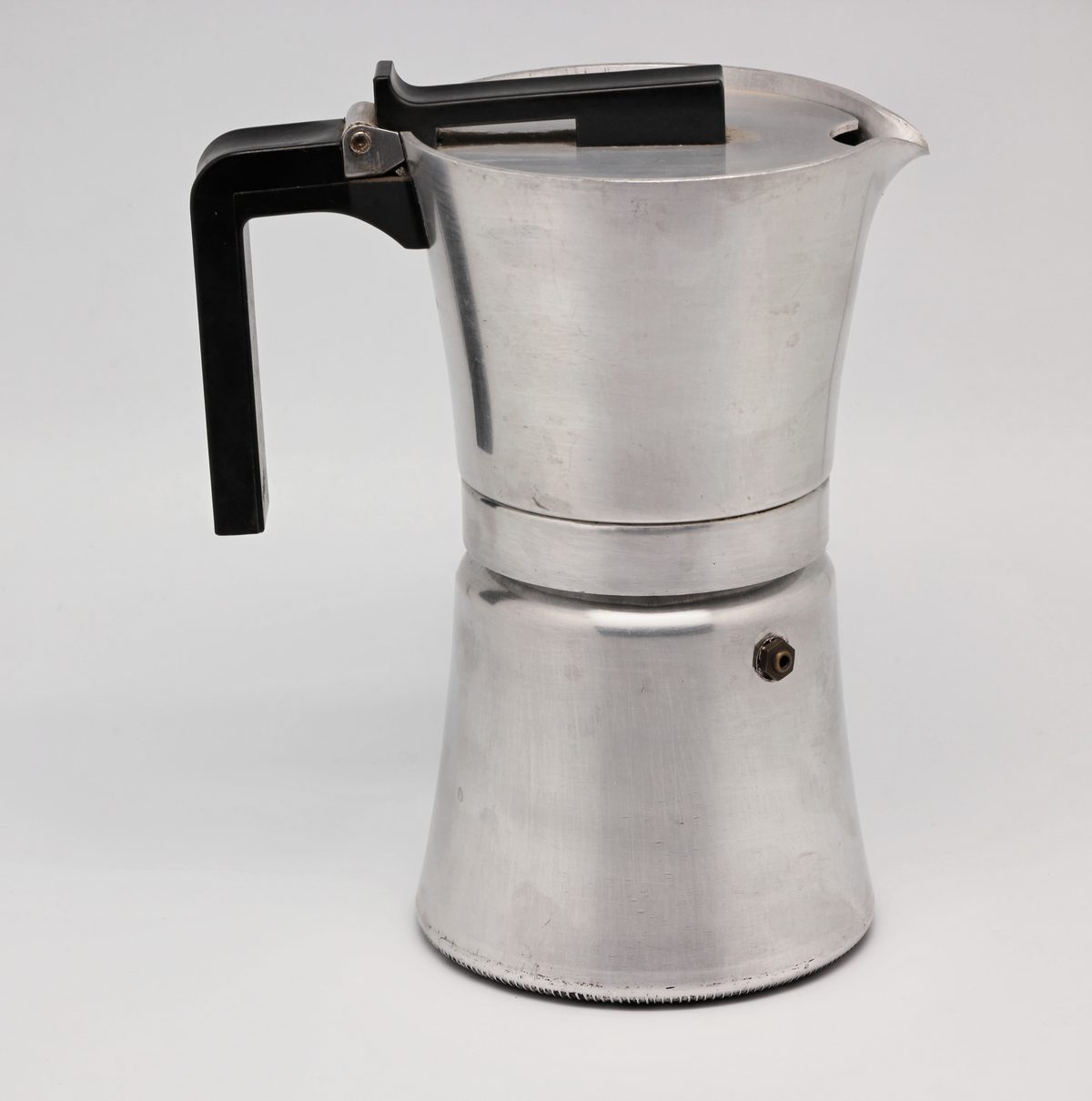
Water in the bottom chamber, fine grounds in the basket, heat underneath. Steam pressure forces water up through the coffee into the top. It is the most temperamental of the three and produces the most intense cup.
It suits you if you want something strong and rich, you are making milk drinks, or you like a brewer with ritual to it.
It does not suit you if you want to walk away mid-brew. It requires attention at the end, and it punishes inattention immediately.
The mistakes, and there are several:
- Heat too high. The most common error by a distance. Aggressive heat scorches the coffee and produces the metallic bitterness moka pots are unfairly blamed for. Medium heat.
- Tamping the grounds. Do not. Unlike espresso, the basket should be filled level and left alone. Tamping raises resistance beyond what steam pressure can manage.
- Walking away. When the flow turns pale and starts sputtering, it is finished. Take it off the heat then. Anything after that point is over-extracted and tastes it.
- Espresso-fine grind. Too fine chokes it. Fine, but a step coarser than espresso.
So which one
Want it easy, and drinking more than one cup? French press.
Want the cleanest cup, one at a time, and room to experiment? AeroPress. If you are unsure, this is the one to start with. It is the hardest to waste beans on.
Want intensity, or a base for milk drinks, and you enjoy the process? Moka pot. Buy it knowing it demands more of you than the other two.
A reasonable case exists for owning all three, because they are inexpensive and they genuinely do different jobs. That is less indulgent than it sounds: together they cost less than one mid-range machine.
Before you blame the brewer
Two things matter more than which of these you own.
Your grind. Each of these wants a different grind size, and getting it wrong will ruin the cup regardless of technique. Our grind size and water temperature guide covers the ranges.
Your water. Coffee is about 98 percent water, and chlorinated tap water tastes like chlorinated tap water no matter what you brew in. See why your coffee tastes flat.
Fix those two and any of these three will make good coffee. Skip them and none of them will.
🏠 Smart Home Picks
Same hobbyist care applied to your network and your front door.