Burr Grinders: Why Yours Matters More Than Your Beans
Updated 2026-09-22
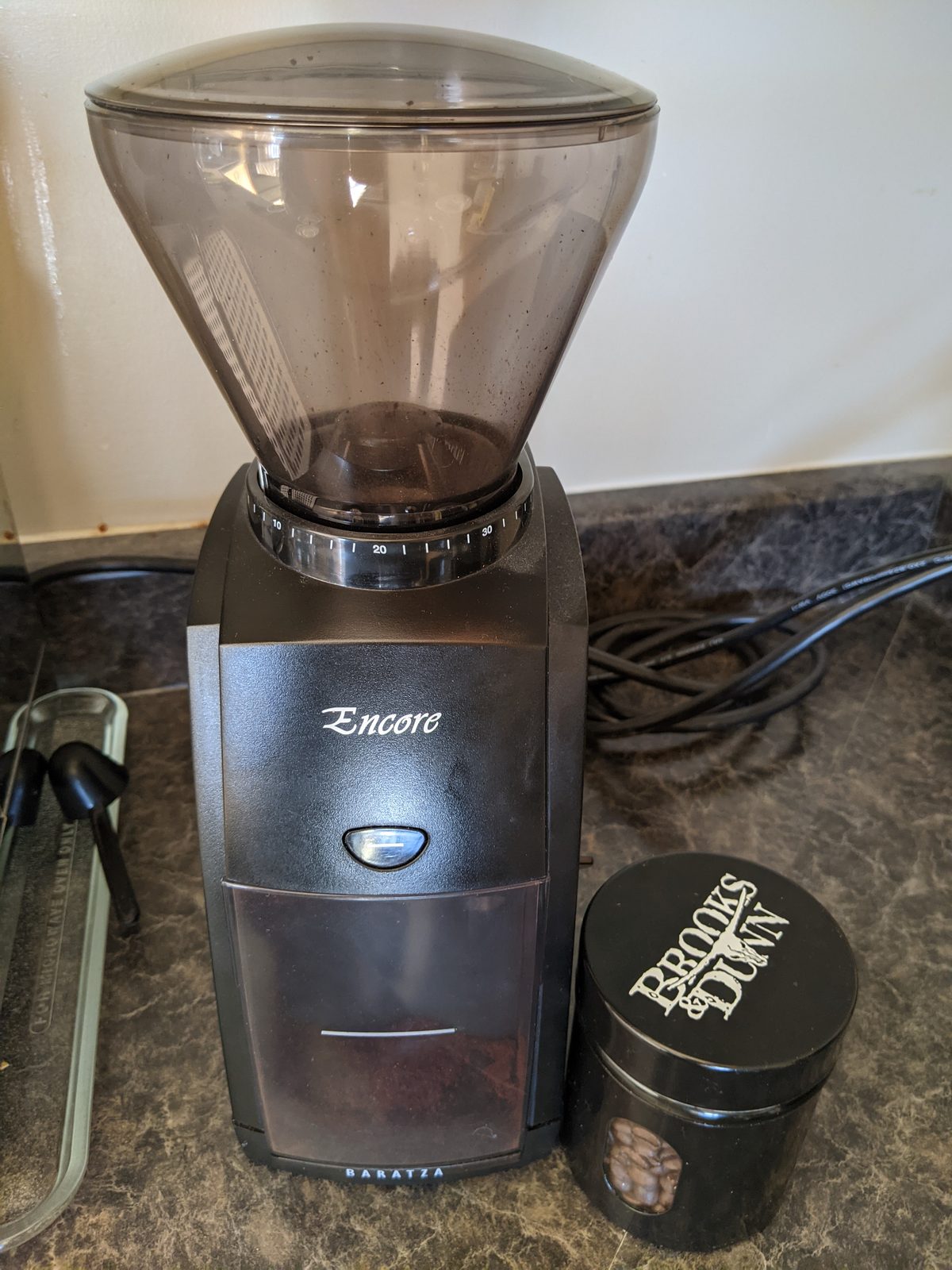
The upgrade order everyone gets backwards
The usual progression is: buy nicer beans, buy a nicer brewer, and eventually, years later, replace the grinder that came free with something.
That order is exactly wrong. If you own a blade grinder, replacing it will do more for your coffee than any bean you can buy, and it is not close.
What a blade grinder actually does
A blade grinder is a propeller in a cup. It does not grind. It smashes, repeatedly, and whatever happens to be near the blade gets hit more than whatever is not.
The result is not a grind size. It is a distribution: some particles the size of gravel, a great deal of dust, and a modest amount of what you actually wanted. Brewing that is not one extraction, it is several happening at once in the same vessel.
The dust over-extracts almost immediately and gives you bitterness. The gravel barely extracts at all and gives you sour, thin, underdeveloped flavor. Both arrive in the same cup, which is why coffee from a blade grinder often tastes simultaneously bitter and weak. That is not a contradiction. It is two problems in one mug.
No brewing technique fixes this. You cannot dial in a grind that does not exist.
What burrs do differently
Burrs are two abrasive surfaces with a gap between them. Beans are drawn through the gap and fractured until they are small enough to pass. The gap sets the size, so the output is reasonably consistent by design rather than by luck.
That consistency is the entire point. Consistent particles extract at a consistent rate, which means the cup has one flavor profile rather than three competing ones, and it means changing the grind setting changes the result predictably. Predictability is what lets you improve.
Conical or flat? You will see this argued at length. It matters far less than burr quality and far, far less than burrs versus blades. If you are choosing your first burr grinder, this is not the question to agonize over.
Hand or electric
A genuine fork in the road, and the honest answer depends on how much coffee you make and when.
Hand grinders give you more burr quality per dollar than electric, because you are not paying for a motor. A good hand grinder costs less than a mediocre electric one and grinds better. They are quiet, they need no power, and they travel.
The cost is your time and arm. Grinding one cup is perhaps a minute of moderate effort. That is pleasant on a Sunday and much less pleasant at half past six on a Tuesday. Fine grinds take longer and require more force, so if you are heading toward espresso the effort climbs steeply.
Electric grinders buy you convenience, and convenience is not a frivolous thing to buy. If the friction of grinding by hand means you reach for instant on weekday mornings, the electric grinder is producing better coffee in practice regardless of what the burrs would do in a lab.
The rough rule: one or two cups a day, unhurried, a hand grinder is superb value. A household, or mornings that are already a scramble, buy electric.
Where the money actually goes
Spending more buys, roughly in this order:
- Burr quality and alignment. The largest single factor, and the reason cheap electric grinders disappoint: the money went to the motor and the housing.
- Adjustment granularity. Cheap grinders give you a few coarse steps. Better ones give you finer control, which matters enormously for espresso and very little for a French press.
- Retention. How much ground coffee stays inside between uses. High retention means today’s cup contains some of yesterday’s coffee.
- Speed and noise, on electric models.
Where it stops mattering: past a certain point you are buying into diminishing returns for filter coffee specifically. Espresso keeps rewarding better grinders for much longer, because it is far more sensitive to particle consistency and requires fine adjustment near the low end of the range.
Matching the grinder to what you brew
- French press wants coarse and is the most forgiving. Almost any burr grinder manages this.
- Pour-over and drip want medium and benefit clearly from consistency.
- AeroPress is flexible, which is part of why it is a good place to learn.
- Moka pot wants fine but not espresso-fine.
- Espresso wants fine, extremely consistent, and finely adjustable. This is the demanding case, and a grinder that is fine for everything else may simply be unable to do it.
If espresso is in your future, buy for espresso now. A grinder bought for filter coffee usually cannot be upgraded into an espresso grinder, and you will buy twice.
Our grind size and water temperature guide covers the ranges in detail.
The one habit that matters more than the machine
Grind immediately before brewing.
Ground coffee goes stale fast, because grinding multiplies the surface area exposed to air. Whole beans hold their character for weeks. Ground coffee loses its aromatics within minutes to hours.
This is why a modest grinder used properly beats an excellent grinder used to prepare a week of coffee on Sunday. It is also why pre-ground coffee, however good the beans were, arrives already diminished.
The short version
If you own a blade grinder, that is your upgrade, ahead of beans and ahead of brewer. Buy burrs.
Choose hand or electric based on honest self-assessment about weekday mornings, not aspiration. Buy for espresso up front if espresso is coming. And grind right before you brew, because none of the rest matters if you do not.
Then fix your water, which is the other thing nobody does. See why your coffee tastes flat.
🏠 Smart Home Picks
Same hobbyist care applied to your network and your front door.