How to Extract Pour-Over Coffee (Ratio, Bloom, and Pour Technique)
Updated 2026-08-21
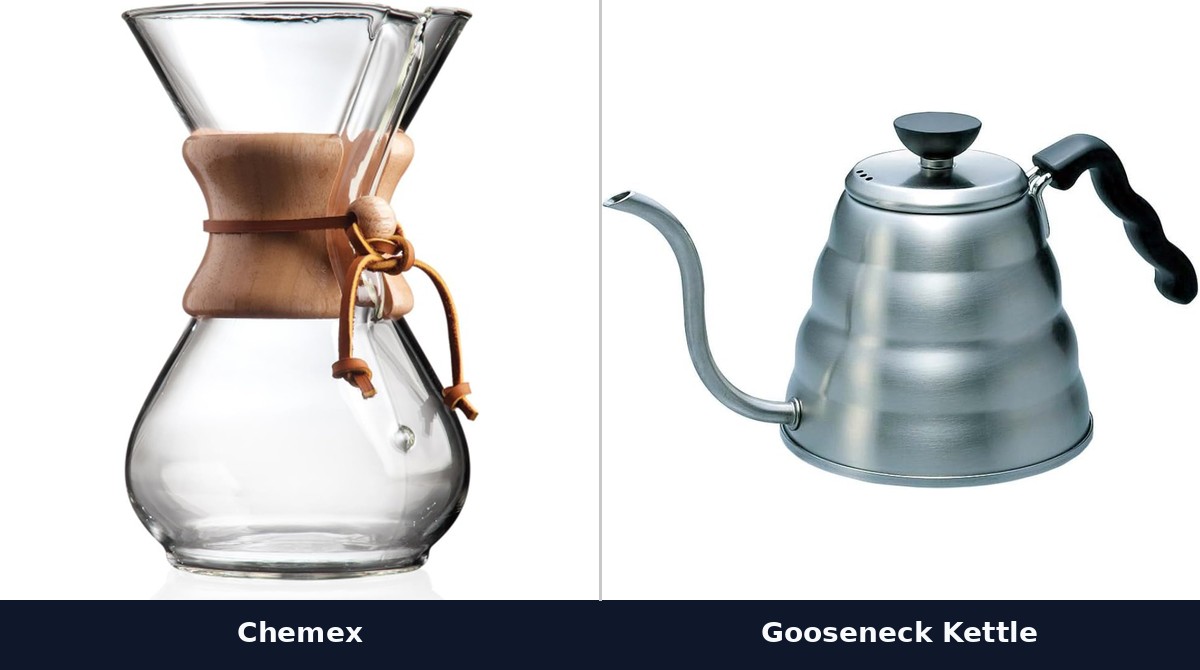
Pour-over has a reputation for being finicky, but it’s really four variables, and once you fix them the process repeats identically every morning: closer to a documented deploy script than a craft you have to re-learn each time.
The four variables
Ratio: 1:15 to 1:17, coffee to water, by weight. Lower (1:15) is stronger and more intense; higher (1:17) is lighter and more tea-like. A kitchen scale matters more here than almost any other piece of gear: volume measurements (scoops, cups) are inconsistent enough to make every other variable pointless.
Grind: medium-fine. Finer than drip, coarser than espresso. Too fine and water can’t flow through fast enough, over-extracting and turning bitter; too coarse and water rushes through before it can pull enough flavor out, tasting thin and sour. Full breakdown in our grind size and water temperature guide.
Water temperature: 195-205°F (90-96°C). Off the boil by 30-60 seconds is close enough without a thermometer. Hotter over-extracts and adds bitterness; cooler under-extracts and tastes flat/sour, especially with lighter roasts.
Total brew time: 2:30-3:30. If your brew consistently finishes faster than that, grind finer. Consistently slower, grind coarser.
The process
- Rinse the filter with hot water first. This removes papery taste and preheats the dripper/carafe. Discard the rinse water.
- Add grounds, medium-fine, weighed on a scale.
- Bloom: pour roughly 2x the coffee’s weight in water (e.g., 40g water for 20g coffee), just enough to saturate all the grounds, and wait 30-45 seconds. This lets trapped CO2 escape, and you’ll see it bubble and puff up. Skipping the bloom is the single most common reason a pour-over tastes uneven.
- Pour in stages, not all at once. A slow, controlled center-out spiral, staying off the filter’s paper edge, keeps the whole bed of grounds saturated evenly instead of channeling water straight through one weak spot. This is exactly why a gooseneck kettle matters: a regular kettle’s wide spout can’t do a controlled spiral at all.
- Finish within your total brew time window (2:30-3:30 from first pour to drained). Adjust grind size for next time if you’re consistently outside it, not mid-pour technique.
It works the same on any dripper
Ratio, bloom, and pour pattern don’t change between a Chemex, a Bodum pour-over, a V60, or a Kalita Wave: only the filter material changes what comes through in the cup. See our Chemex vs. Bodum comparison if you’re still choosing the dripper itself; this technique applies to either one exactly as written above.
Troubleshooting by taste
| Tastes like | Likely cause | Fix |
|---|---|---|
| Sour / thin / weak | Under-extracted | Grind finer, raise water temp, or extend brew time |
| Bitter / harsh / dry finish | Over-extracted | Grind coarser, lower water temp, or shorten brew time |
| Uneven, inconsistent cup to cup | Pour technique or no bloom | Slow the pour down, don’t skip the bloom, keep the spiral off the filter edge |
🏠 Smart Home Picks
Same hobbyist care applied to your network and your front door.